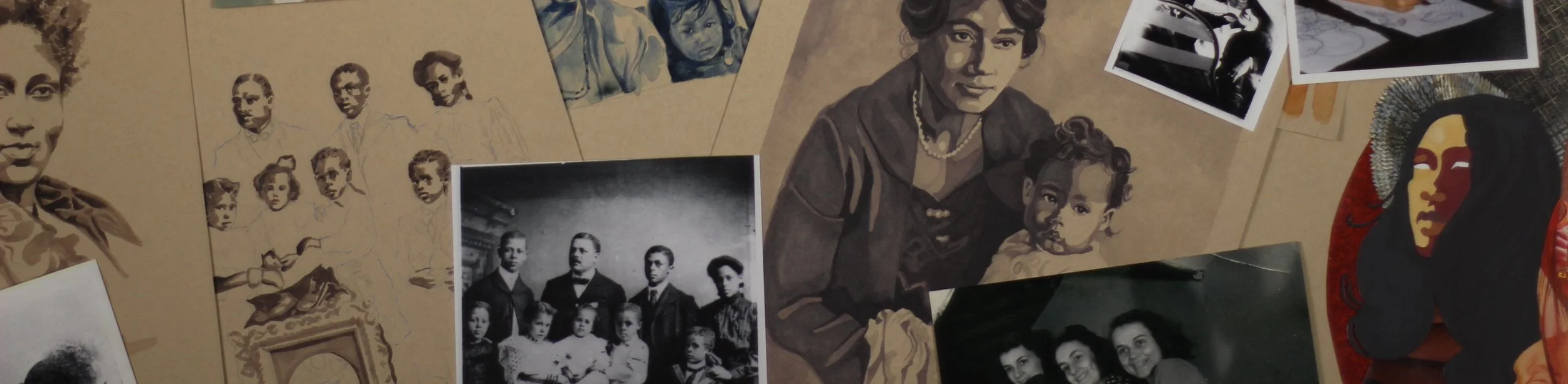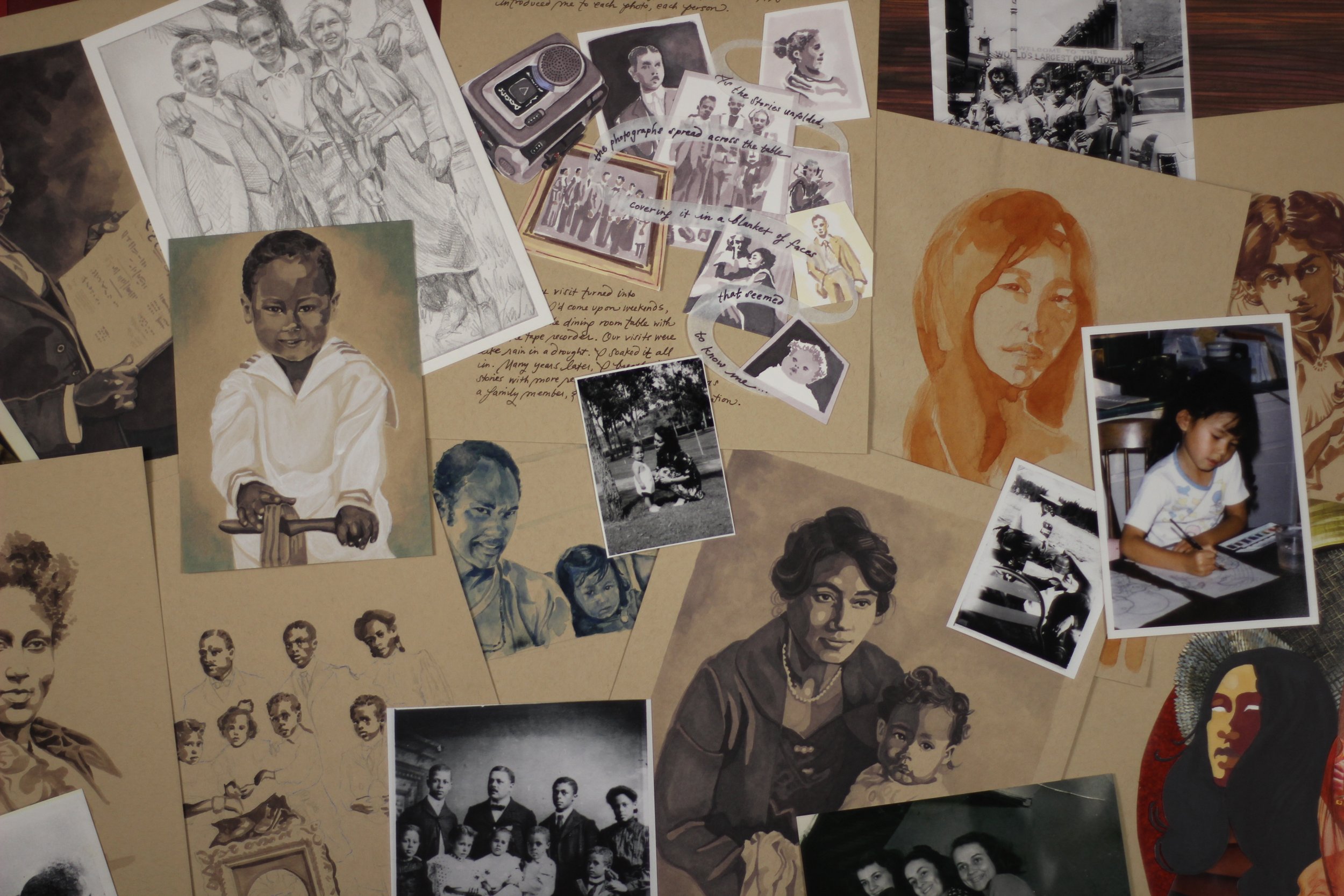
Stories are our inheritance.
My work and creative practice
are grounded in ancestral connection.
I grew up with a strong Chinese American identity, fully immersed in family, community, and culture. Around the age of seven, I began to register that my father, though a person of color, was not Chinese. When I asked questions about our heritage and identity, I didn’t receive answers that I understood. These experiences sparked a lifelong hunger to decipher our past, and root my present.
Over the years, I’ve conducted extensive family history research in an ongoing quest to understand our history and the complexities of racial experience. Through interviews, historic and genealogy research, and personal work, I’ve begun to reconcile and heal inherited traumas of racism.
I’m working on a personal and family memoir on race and identity that goes back seven generations. Hugh E. Macbeth, Sr., my paternal great grandparent, is just one ancestor whose stories I’ve gathered through oral history interviews with my grandfather, his son. Below you’ll find a snapshot of Hugh Sr., and brief windows into the lives of other ancestors whose stories I carry.
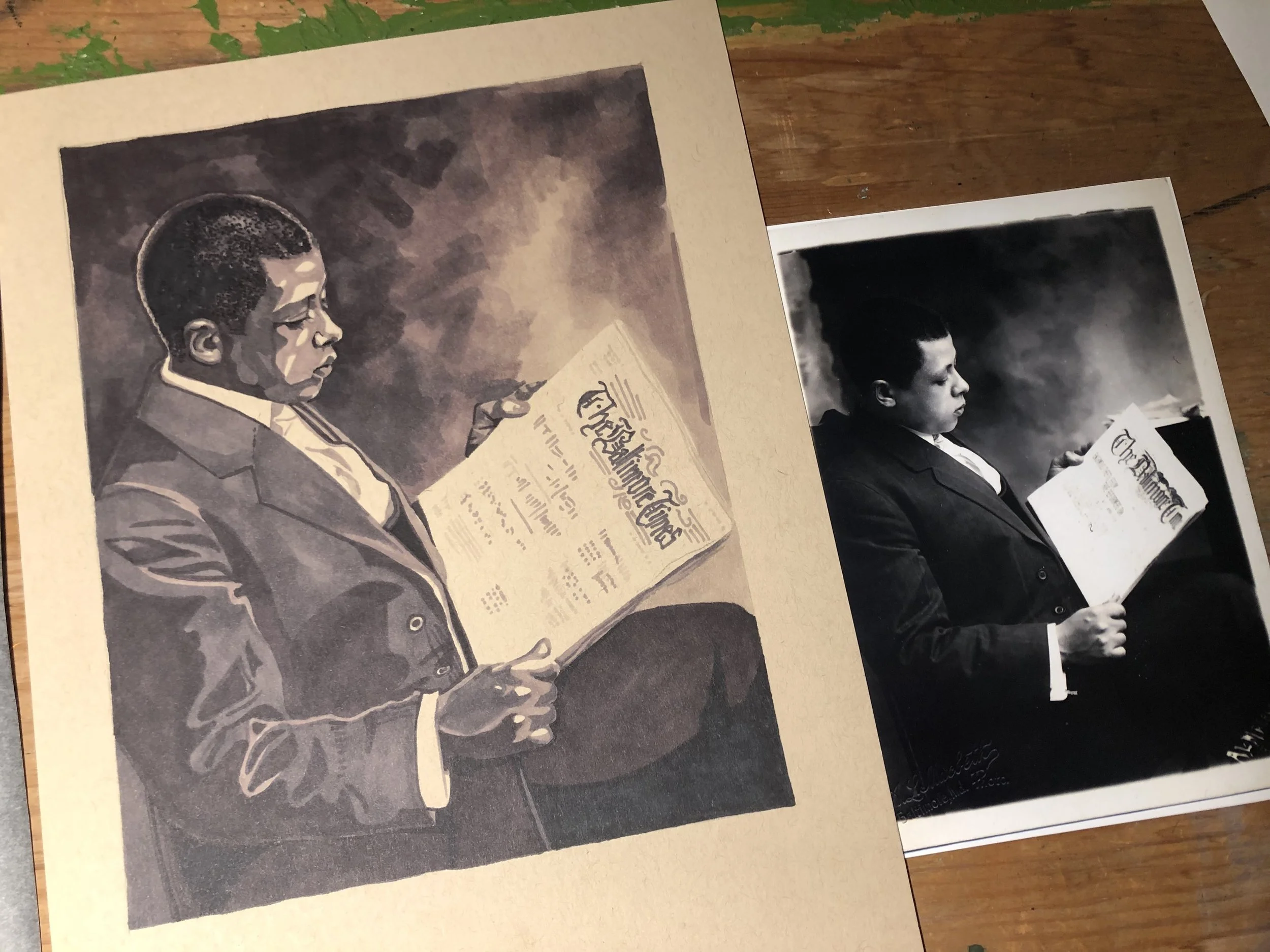
Hugh E. Macbeth, Sr.
My paternal great grand was a Black civil rights attorney based in Los Angeles from the early 1900s to the 1950s. Hugh Sr. was born in Charleston, South Carolina in 1884. He started The Baltimore Times, a Black newspaper in Baltimore, and practiced law there. After a few years he took his family to California where social change felt more possible. Hugh Sr. settled in Los Angeles, where he fiercely fought restrictive covenants (discriminatory policies) and advocated on behalf of working families and the poor. Hugh Sr. was dynamic and tireless in his efforts. I’ll attempt to give you just a taste of his work.
Hugh Sr. fought segregation in California through the court system. He won the court case that allowed Black Americans to set foot on Venice Beach, and successfully advocated for the Hollywood Bowl to allow Black boxers to fight against white. Over the years, Hugh Sr. built a multiracial law firm whose partners included women lawyers, something that was nearly unheard of at the time. Partner Chiyoko Sakamoto was Japanese American, and Eva Mak was Iranian American.
In the early 1920s, Manhattan Beach, a town just outside of Los Angeles, escalated its harassment and antagonism of Black residents by taking their land through eminent domain. Hugh Sr. represented the Bruce family of Bruce’s Beach and others in the courts to fight their forced displacement. In 2021 The New York Times reported on the ongoing effort for reparations and the return of the land. In June 2022, the NYT reported that it will be returned, nearly one hundred years later.
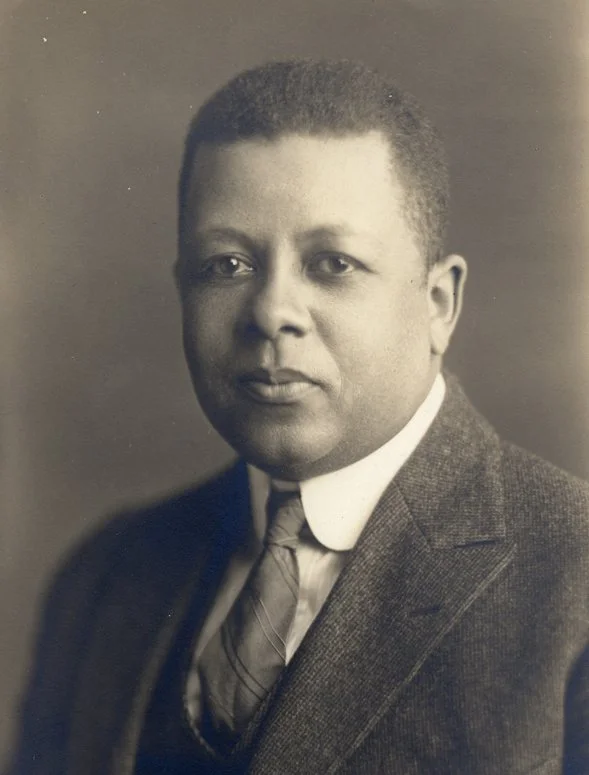
Top: Hugh E. Macbeth, Sr. (photo from Janine’s collection).
Bottom: Hugh E. Macbeth, Sr. holding a copy of his newspaper,
The Baltimore Times, circa 1903. Artwork by Janine Macbeth, 2021.
In the 1940s, Hugh Sr. fought the mass incarceration of Japanese Americans “tooth and nail,” as my grandfather put it. Hugh Sr. advocated against the signing of Executive Order 9066, visited incarceration sites, and fought to preserve the rights of Japanese and Japanese Americans. Historian Greg Robinson dedicated a chapter to Hugh Sr.’s dedication and determination in his book After Camp: Portraits in Mid-Century Japanese American Life and Politics (University of California Press, 2012). The chapter is entitled “The Los Angeles Defender.”
Los Angeles, CA
Chicago, IL
Lillian Cue
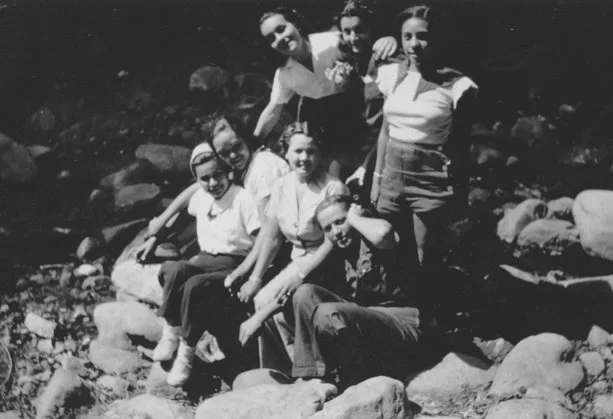
My paternal grandmother Lillian Cue’s family moved north from Mississippi and New Orleans with the Great Migration in the 1910s. By the time Lillian was born, the family had settled in Chicago. Lillian’s parents were at times mulatto, at times colored-Negro-Black, though based on appearance alone, may have been perceived as white by today’s standards. Lillian’s father Joseph was the Maitre de of a fine dining restaurant in the Pullman Building, the company that made train cars, and whose workers later organized the Pullman Porters’ union, the Brotherhood of Sleeping Car Porters. Joseph got Lillian’s brothers jobs as dining car waiters on trains that traveled up and down the west coast. But Lillian’s brothers were wild, so her mother sent Lillian and her older sister out to California to keep an eye on them…
Above: Lillian (standing, back left) with her high school friends in Chicago, circa early 1940s (photo from Janine’s collection).
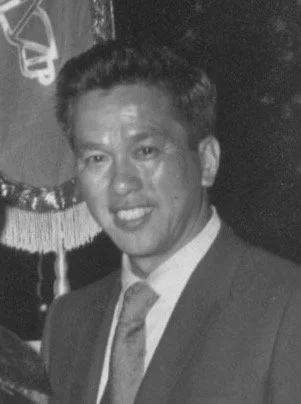
Above: Bill Louie, Sr. (photo from Janine’s collection).
Oakland, CA
William “Bill” Louie, Sr.
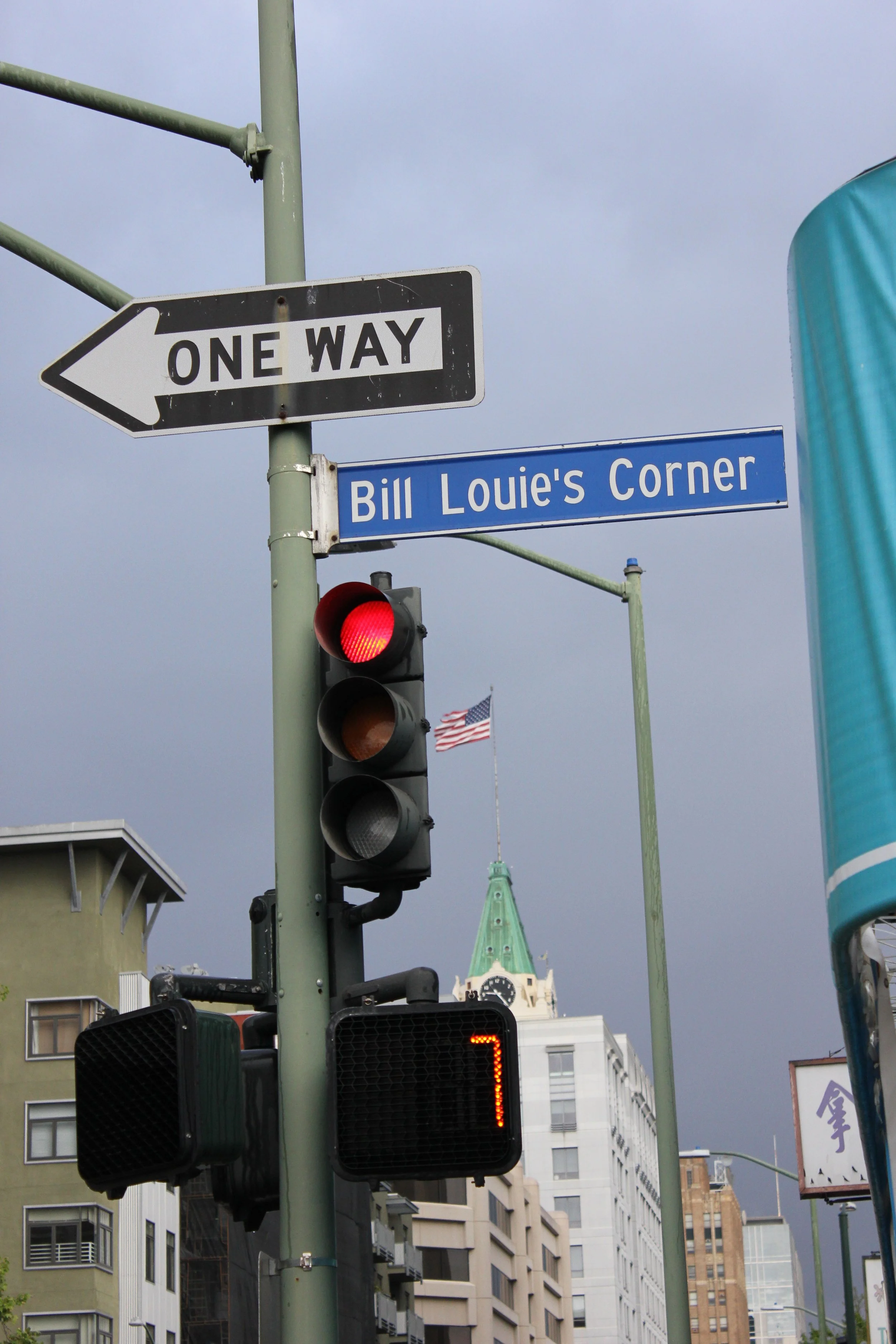
Bill Louie, Sr. my maternal grandfather, was born and raised in San Francisco until his family moved to Oakland to open a small grocery store when he was in high school. Bill became a fixture of the Oakland Chinatown community from the 1950s until the late 1990s as the small business owner of a Texaco gas station and adjoining auto body shop on the corner of 8th and Franklin. He was active in local community organizations, and gave loans and jobs to newly arrived immigrants. To honor his contributions, the community had a city street sign installed at the corner of 8th and Franklin naming it “Bill Louie’s Corner” when he died.
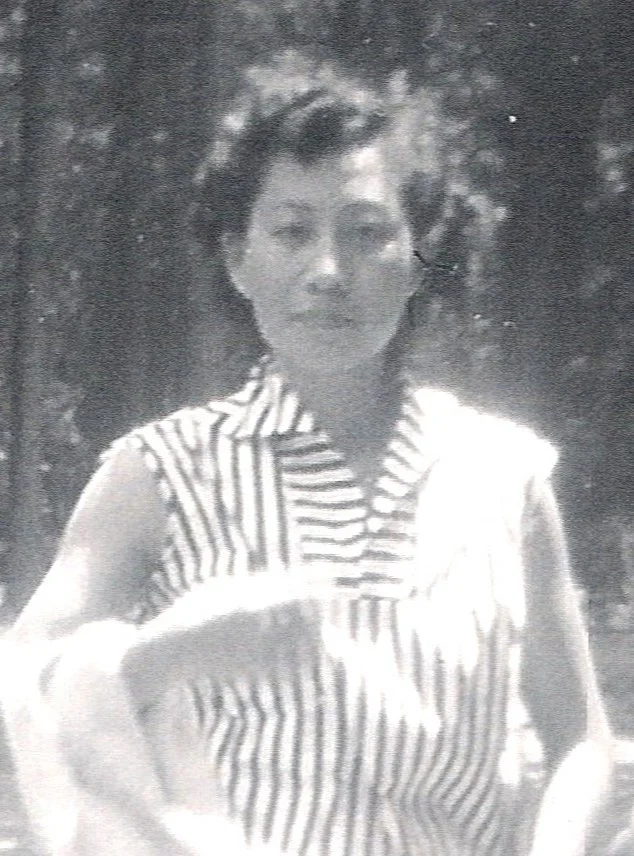
Above: Merrilee Louie (photo from Janine’s collection).
Oakland, CA
Merrilee Louie
Merrilee Louie, my maternal grandmother, immigrated from Toi Shaan, China, and shares the experience of many Oakland Chinatown immigrants. After surviving Japan’s invasion of China from the 1930s-1940s, Merrilee’s parents arranged her marriage with a stranger (Bill Louie). Merrilee took a ship back to the U.S. with her now-husband, where the traumas of war were compounded by the traumas of living in the foreign, rugged town of Oakland, and being a Chinese daughter-in-law. The industry of raising six children and managing the family business shrouded her gifts as an artist and brought out her skills as a healer.